
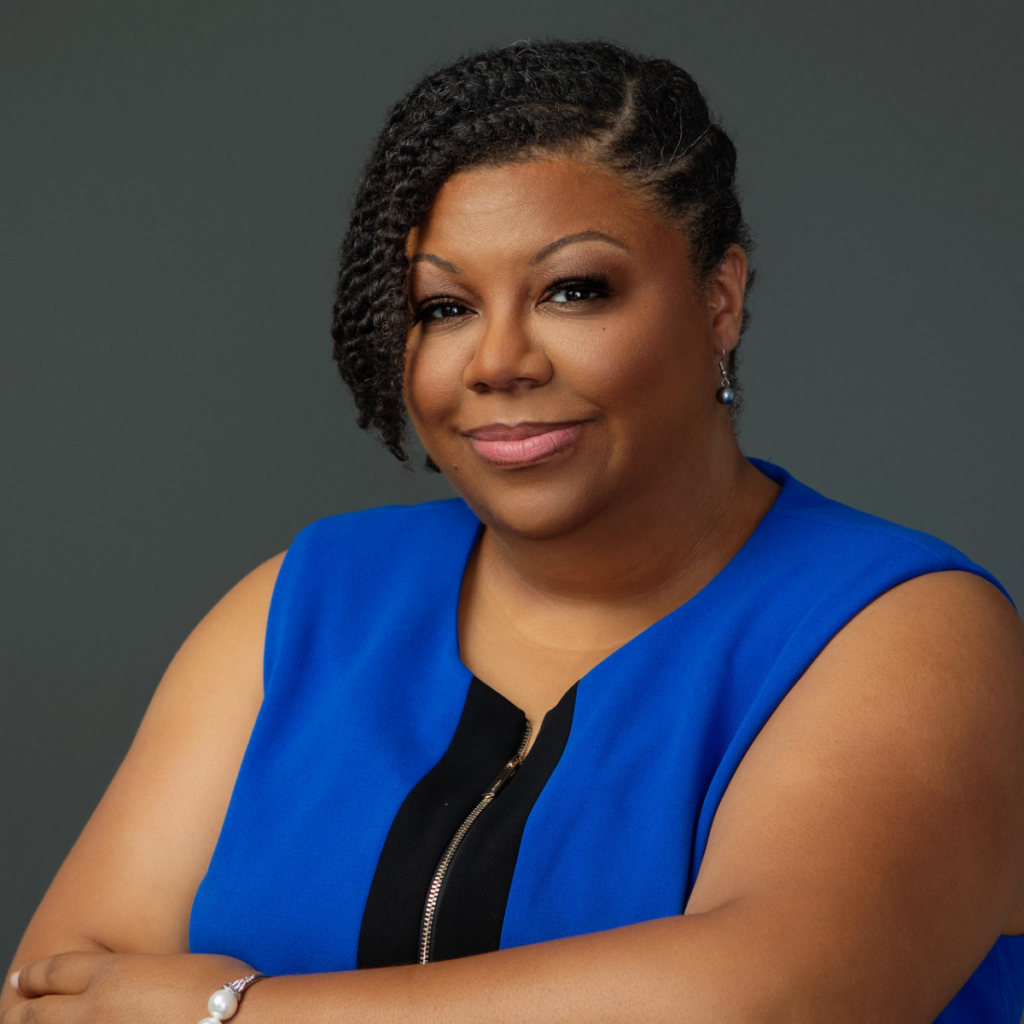
Delishia Porterfield (she/her) is a dedicated mother, educator, social justice advocate, and experienced legislator from Tennessee, originally from Memphis and now based in Nashville. After studying at Howard University and Tennessee State University, she spent nearly a decade in public education, serving students with disabilities. In 2019, she was elected District 29 Councilwoman for Metropolitan Nashville and Davidson County, winning her race by just 25 votes. She currently serves as a Councilmember At Large and President Pro Tem, and previously chaired the Budget and Finance Committee for two terms, overseeing Nashville’s $3.8B budget. Delishia is also a lead trainer with the Collaborative Governance Academy and serves as Co-Chair of the Black Caucus for Local Progress. A proud mother, she enjoys traveling with her daughter when she is home from college and spending time with their rescue pet, Violet.
Let’s dive into her story:
Tell us about the work you do and why it matters.
I am a Councilmember At Large for Nashville and Davidson County, representing over 700,000 Nashvillians. I serve as the immediate past chair of the budget and finance committee. I serve on the budget committee, the public health and safety committee, the audit committee, the ethics board, the Unified Housing Leadership Committee and I’m also on a special commission around city preparedness for extreme weather. I am honored to be a lead trainer for the Collaborative Governance Academy (CGA), in partnership with re:power fund and Local Progress, training local and state elected officials, their staff, and movement leaders with the skills, strategy, and shared language to govern in a new kind of way. This work matters because we need more elected officials aligned with everyday working-class people, not with the predatory billionaire class or big business. We need values-aligned leaders who are fighting for affordable housing, renewable energy solutions, and public education that improve public quality of life. It is more important than ever that we elect officials who are accountable to the people, committed to co-creating solutions that both serve and protect their constituents, and dedicated to democratizing knowledge while building lasting power within their communities.
What’s a win that lives with you?
A recent major win was sponsoring and passing a city council resolution opposing The Boring Company’s plans to build an underground tunnel system in Nashville. The company selectively engaged business-friendly state legislators while bypassing local municipalities, deliberately ignoring the elected officials who represent the very communities they aim to build through. This fight also raised serious environmental concerns, from potential land disruption to long-term impacts on local infrastructure. It was a hard-fought victory, as powerful lobbyists worked aggressively to defeat the resolution. But public land must serve the public good. As an elected official, it is my responsibility to go on record and stand firm against big business steamrolling ahead with state handouts and no accountability. While the resolution is non-binding, it marks a powerful step forward—sending a clear message that our city will not be bought or influenced by corporate dollars, and that our residents deserve real transparency and meaningful, community-centered transit solutions.
How did your re:power training reshape your leadership?
I’ve learned in my leadership that different people show up to this work in different ways, but we’re all needed to move it forward. Instead of infighting, we work better when we can appreciate the fundamentals of co-governance and power-building, and what it means to empower your community. In my eyes, co-governance means intentionally sharing power and working hand in hand with marginalized communities so members can participate in shaping policy.
This line of work requires a lot of heart and hustle. How do you find joy and recharge?
I’m in my soft-girl era—I love taking time to pamper myself! For me that means scheduling time for me, whether that’s for reading and relaxing or getting my facials, manicures, pedicures, and treating myself to massages. I travel, explore new cuisines, and stay open to new experiences and opportunities. For me, it’s all about finding inner peace amid life’s frenetic pace. I also lean on my village—both blood and chosen family—who pour unconditional love, joy, and support into my life.
