
Tatiana Brown (she/her) is a collaborative governance leader based in Seattle, WA who is deeply moved to answer the question of how we shift power back to communities historically excluded from our decision-making processes. She was raised in the movements fighting for food sovereignty, establishing racism as a public health crisis, and creating systems of care. She is proud to be a youth leader in the climate justice movement, and a product of programs like Sage Leaders, re:power, and the long legacies of organizers before her. The answers to our biggest problems today will not be something we have yet to discover, but based on our ability to remember our way forward. Equipped with tools in participatory design, movement building, policy, and narrative strategy, Tatiana aims to bring tangible change to communities so we may usher in our collective vision of the future. Tatiana currently serves on the Washington Environmental Justice Council as a community representative and co-chair, has built tools for collaborative governance at the People’s Economy Lab, and is running for State Senate in the 37th Legislative District. She holds a Bachelor’s in Medical Anthropology from Virginia Commonwealth University and dual Master’s in Public Administration and Public Health from the University of Washington.
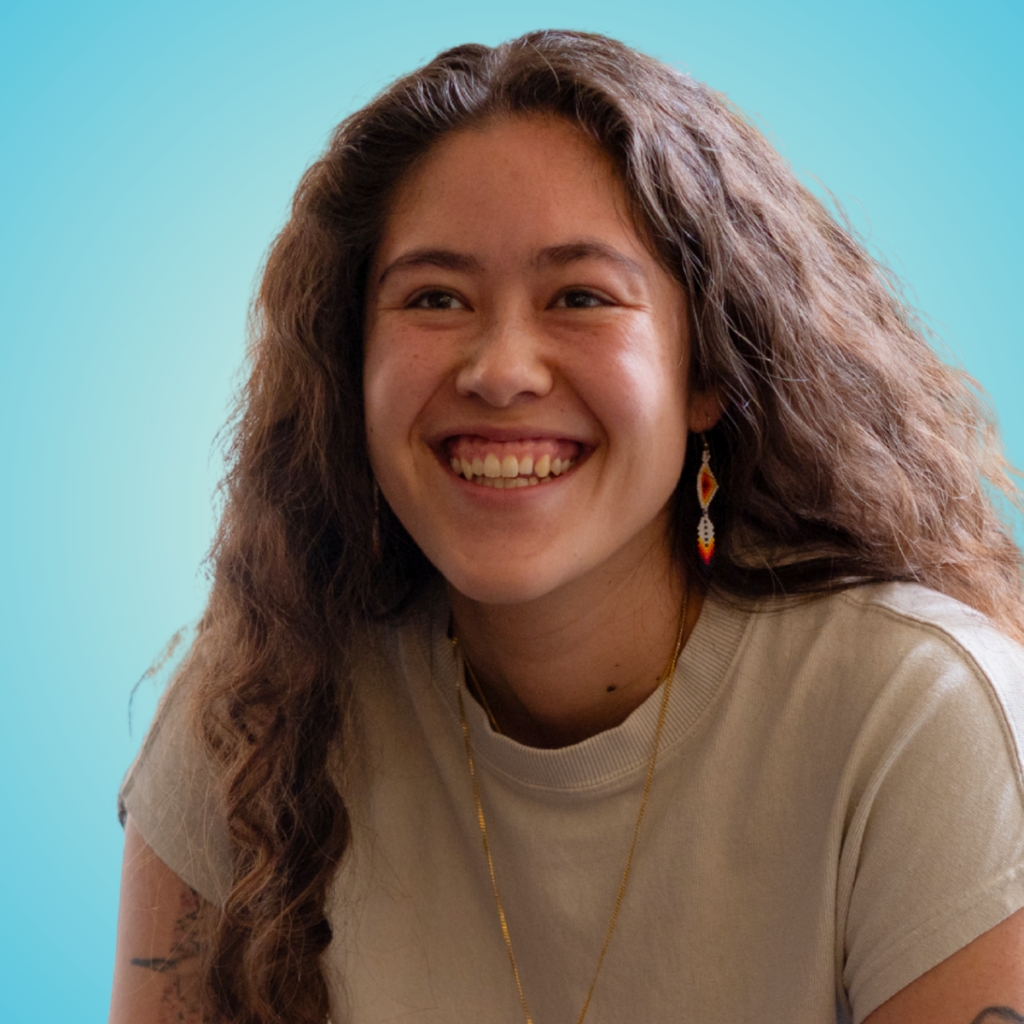
Let’s dive into her story:
Tell us about the work you do and why it matters.
I am a collaborative governance champion and proud youth leader from the climate justice movement based in Seattle, WA, and I fundamentally believe we are in the ultimate fight for our future. In a time when we have the greatest wealth inequality, growing health disparities, the climate crisis, and evolving threats to our democracy, mobilizing for an alternate version of the future is not only necessary but survival. This means standing against corporations like Microsoft, who are leading the way in data center proliferation, reviving the fossil fuel industry, and deploying surveillance infrastructure for ICE and the IOF. It also means working with elected officials and community organizers who are boots on the ground to co-develop policies that work for our communities, not corporations. I have experience in participatory design, movement building, policy, and narrative strategy, and built tools for collaborative governance at the People’s Economy Lab. I serve on the Washington Environmental Justice Council as a community representative and co-chair, and am now running for office in the Washington State Senate, 37th Legislative District.
What’s a win that lives with you?
A win that lives with me is the passage of the Washington State Healthy Environment for All Act, commonly known as the HEAL Act in 2021. It was the collective win of over 89 community groups and tribes banding together to demand the right to healthy air, water, and future for generations to come. When passed, it became the first environmental law in the entire United States to address environmental racism and calls to eliminate health disparities in frontline communities. Instead of focusing on industrial permits, it pursues culture change within government agencies and establishes a community and tribal-led Environmental Justice Council (EJC). As the co-chair of this 16-person Governor-appointed Council, I worked across the state to guide the Governor and State Legislature in implementing the HEAL Act. Together, we are building the infrastructure to meet our most pressing EJ needs: clean drinking water for farmworker communities, wildfire protections and climate resilience, and tribal sovereignty in the face of data centers. The HEAL Act and the EJC are visionary examples of collaborative governance, and what becomes possible when government is designed to center community.
How did your re:power training reshape your leadership?
I’m a proud alum of the WoC leadership program. Being invited to join a cohort of 40 women of color leaders from across the United States was not only a deep honor; it was also a lightning bolt that left me laser-focused on myself, my future, and my commitment to this cohort. The wisdom, strength, and collective vision for our shared future felt alive in those spaces: in the womxn selected, in our conversations, creativity, and power. One of my favorite memories was the meaning of our names and stories of our foremothers. It was an emotionally tender experience that made me recognize the threads that tie our work to the women before us and those that follow .
It was also my first time professionally being surrounded by other womxn who experienced the world similarly to me. As a queer womxn of color, as someone mixed race and multi-ethnic, there is an understanding that develops at a young age: this world was not made for you, and it does not wish to see you thrive. It forges a great resilience and unwavering commitment to build a vision of the future that can hold our multitudes. In a room full of womxn who experience the world through this lens, re:power offered a different path: space to grieve together, feel the unbridled strength we possess, and permission to dream something radically different. I was reshaped as a leader and human—someone who unapologetically leads with my whole self.
This line of work requires a lot of heart and hustle. How do you find joy and recharge?
In my free time, I’m part of Hui Wa‘a O Wakinikona, an outrigger canoe club based in Seattle. We canoe across the Pacific Northwest, witnessing the wild beauty of the Puget Sound and, concerningly, the environmental impacts of oil spills along the marinas. As an environmental justice leader, being outside in nature rejuvenates me and grounds me to the earth. In the wise words of our Po’o Wa’a (Uncle Stan) – life is like a canoe: to know where you are going, you have to know where you’ve been.
