
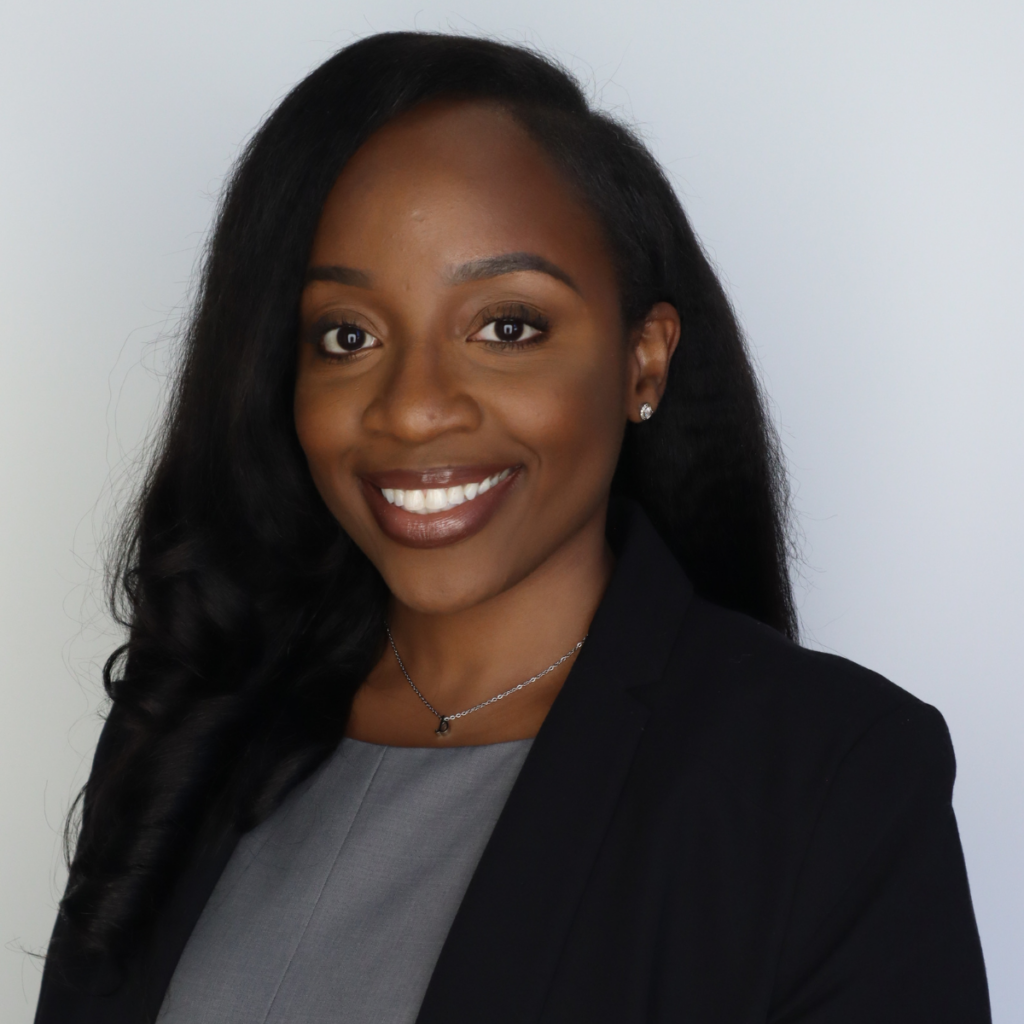
Beatrice Beaubrun (she/her) is the Deputy Director at North Carolina For The People and has over a decade of experience in political organizing, nonprofit management, and communications. As the Deputy Director, she leverages her expertise to build coalitions, drive civic engagement, and advance digital security in the fight for equitable policies. A Jersey native and proud Haitian-American, Beatrice’s journey in advocacy began with her work on the 2008 election doing GOTV alongside her mom knocking on doors in the streets of Philly. Her passion for elevating marginalized voices led her to pursue a B.A. in Political Science from North Carolina Central University and an M.A. in Communications from Queens University of Charlotte. Through her diverse roles, Beatrice remains committed to amplifying underrepresented voices and expanding opportunities for growth and change in the communities she serves.
Let’s dive into her story:
Tell us about the work you do and why it matters.
I serve as Deputy Director at North Carolina For The People and its 501(c)(4) arm, where I lead organizing and communications strategy for a statewide pro-democracy coalition. My work focuses on voter engagement, base building, and leadership development in Black, Latine, and Indigenous communities across North Carolina. I also coordinate our Democracy Advocates Communications Cohort, a working group of movement communicators from across the state. Together, we build shared narrative strategy, run rapid response campaigns, and strengthen the communications infrastructure our movements and communities need. And it matters for a multitude of reasons, the main one being that this work can not move unless we move together. Unless we create the momentum, the passion, and the collective spirit to cement the infrastructure and capacity to build real people power.
What’s a win that lives with you?
The win that lives with me is when challenger Jefferson Griffin conceded the North Carolina State Supreme Court seat to Allison Riggs. He disputed the votes of thousands of North Carolina voters, ignoring their democratic will and right to choose. His efforts set a dangerous precedent: if the will of the people can be ignored, then those in power can simply rewrite those rules as they see fit. Groups and coalitions across the state rallied, raising visibility and awareness on his campaign’s attempt to disenfranchise voters. I’m proud because North Carolinians showed the nation that we will not buckle down to politicians who would rather change the rules than concede defeat.
How does your re:power training show up in your work today?
My answer is simple: community. I’m still in touch with my State Courts on the Power Map cohort, specifically a peer who works in judicial integrity. So much of our work mirrors one another, and there’s a level of ease, confidence, and skills that grows when you’re in a trusted space. Being part of this community is like having a battery pack on my back; it charges me in ways I didn’t know I needed. I use the course lessons, the spreadsheets, the power mapping, strategies – it’s embedded in the work I do on a daily basis.
This line of work requires a lot of heart and hustle. How do you find joy and recharge?
I recharge by doing things that bring me back to joy and community. That can look like spending time with friends, exploring good food spots, or getting outside for a spin class or Pilates session. I’m also a creative at heart, so designing, working on apparel projects, or building something new always resets my brain. A good laugh, good music, and good people go a long way.
